
Author: Nabaghan Ojha
-
Does Consciousness Come From the Brain? Testable Predictions from the Knower Centred Model (KCM)
The Knower Centred Model (KCM) proposes five testable predictions suggesting consciousness is not generated by the brain but is the fundamental condition in which experience appears.
-
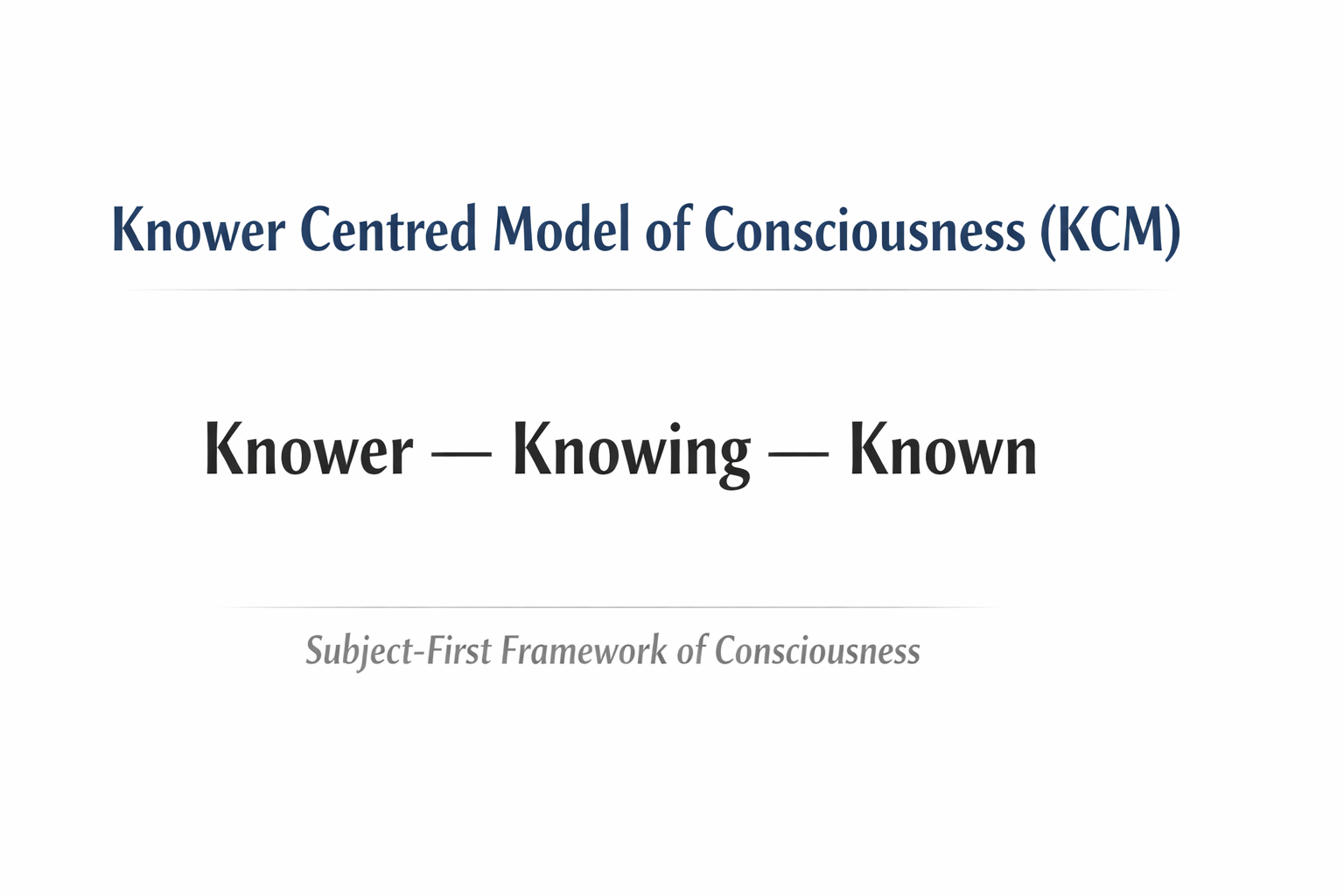
What is the Knower Centred Model of Consciousness (KCM)?
The Knower Centred Model of Consciousness (KCM) is a subject-first framework that places the knower—the witnessing presence—at the foundation of experience. Rather than explaining consciousness in terms of neural or computational structure alone, KCM proposes that experience is irreducibly structured by the Knower, Knowing, and Known. The Core Idea of KCM The Knower Centred Model…
-
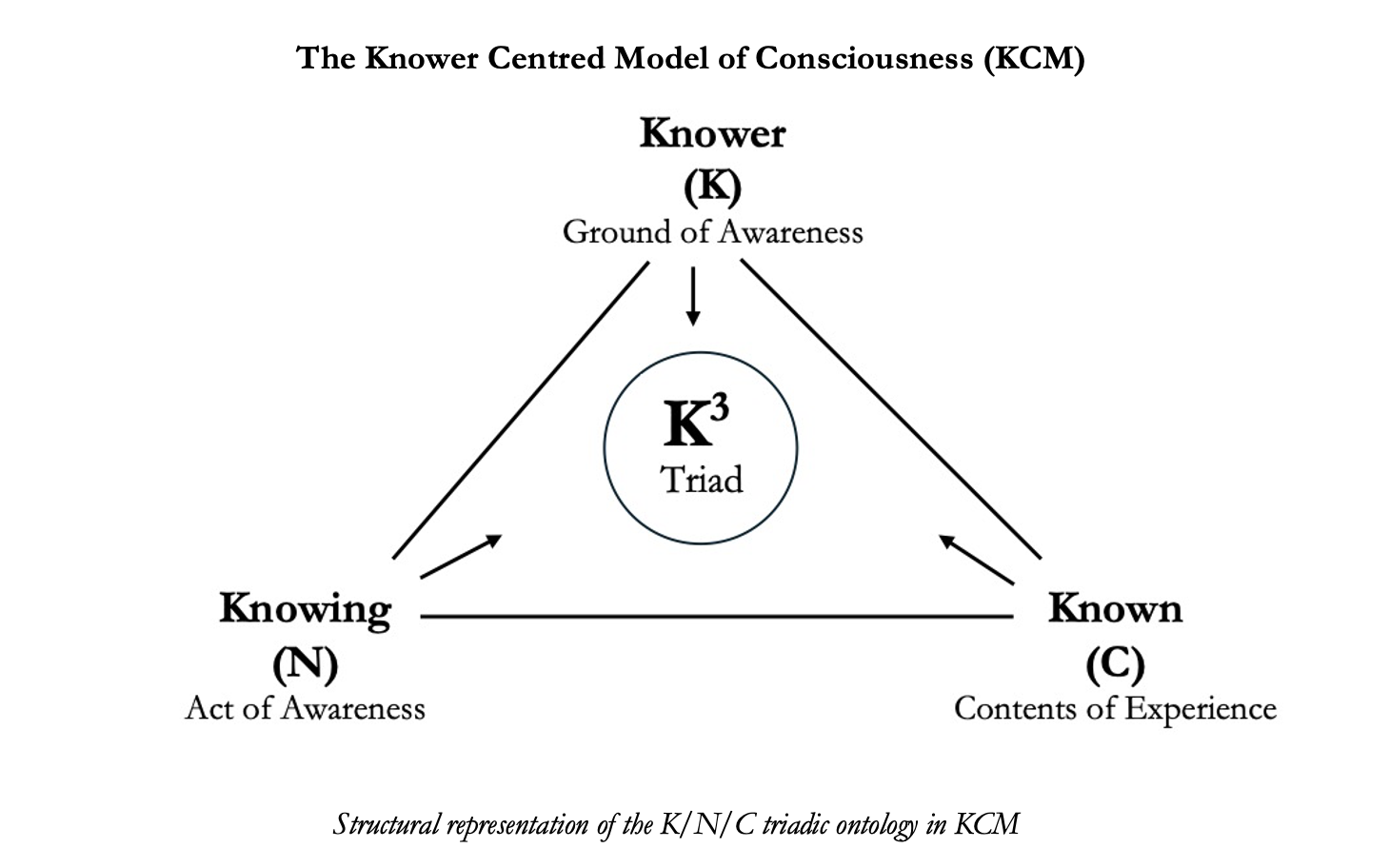
A Typed Ontology of Consciousness: Introducing the Knower Centred Model of Consciousness (KCM)
Introducing the Knower Centred Model of Consciousness (KCM): a subject-first framework with a typed ontology, the K³ triad (Knower–Knowing–Known), and an empirical research program.
-
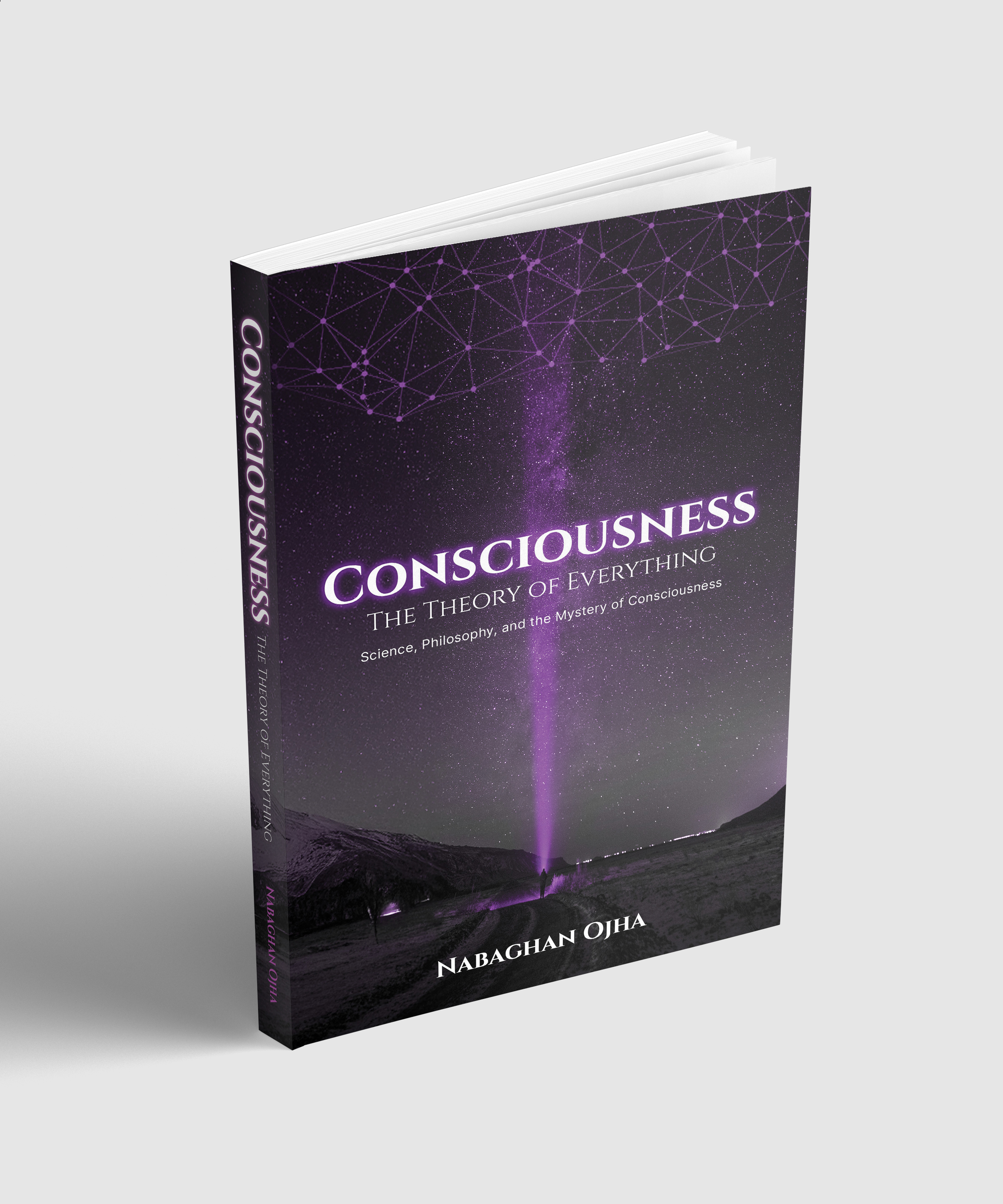
Consciousness: The Theory of Everything
Consciousness: The Theory of Everything goes live worldwide. Forged through three years of relentless exploration into non-dual philosophy and quantum physics, Consciousness: The Theory of Everythingemerges as a bold yet quiet whisper toward humanity’s most enduring question. For decades, physicists have pursued a single, all-encompassing equation — a Theory of Everything — to unify the…
-

Why I wrote Consciousness: The Theory of Everything
Science can explain how the universe works — but it still cannot explain why it is experienced at all. There is no equation for awareness, no formula that tells us why there is something it feels like to exist. This unanswered question is why I wrote Consciousness: The Theory of Everything. For centuries, physics has…
-

Consciousness: The Vital Quest of Our Time
The study of consciousness has captured significant attention from scientists across various disciplines, especially at a time when scepticism about the existence of God is on the rise. Getting into this area, I have found three primary reasons that drives this heightened interest on consciousness. Firstly, the remarkable development in neuroscience, cognitive science and psychology…
-
Why Paradoxical Language?
When dwelling into the realm of ancient Indian philosophy, I encountered numerous instances of paradoxical language used by the revered sages and eminent philosophers to define the nature of ultimate reality. In the beginning, understanding such languages proved to be quite challenging. However, with time, I managed to find out the underlying reasons behind them.…
-

Beyond Science: The Search for Consciousness
The time has come when Advaita Vedanta has captured the attention of scientists, particularly physicists, as a subject of great interest. This shift arises from an unfulfilled expectation within the scientific community- the development of a “theory of everything” — a unified equation capable of explaining the entire universe. Instead of arriving at clarity, ongoing…